School Life

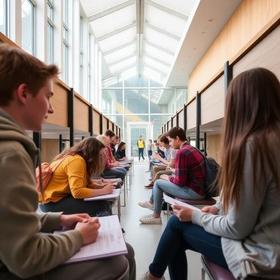
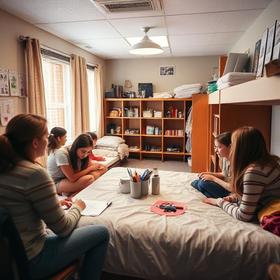
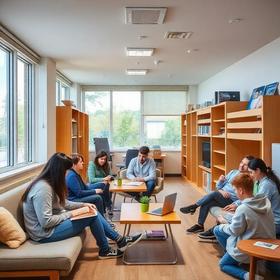
For boarding school students, and many teachers, the campus is home. Explore dormitory living, get expert advice on learning and living away from home and learn more about what can be done to help your child transition to and succeed in boarding school. Find resources for parents, teachers and students. We’ll cover sustainability, boarding school jargon, and corporal punishment. Read first-hand accounts from parents of boarding school students, find graduation gift ideas, and learn why small classes are effective.

View the most popular articles in School Life:

Boarding School Parents’ Concerns in 2025

Updated
|
Boarding School Parents’ Concerns in 2025
Explore parents’ top concerns about boarding schools in 2025, from health and safety to tuition, academics, and student well-being.

In The Pandemic: Parents' Concerns About Boarding School (Updated 2025)

Sending children to boarding school has always involved a mixture of excitement and worry. Parents naturally wonder about safety, homesickness, and tuition. But since the COVID-19 pandemic reshaped education beginning in 2020, boarding schools have had to adapt in ways that continue to influence policy and parental concerns in 2025.

Today, parents’ questions extend beyond virus protocols to include long-term health preparedness, affordability, student well-being, and the value of in-person education in a digital-first world. Let’s address some of the most common concerns families still raise when considering boarding school in 2025.

Will my child be safe at boarding school?

In 2025, safety at boarding schools means more than protection from illness. While the acute phase of the pandemic has passed, schools have kept many of the practices introduced in 2020. Routine health monitoring, improved ventilation, and upgraded campus medical centers are now standard. According to the U.S. Department of Education, over 80% of private schools implemented permanent improvements to air filtration and sanitation systems by 2023, and those investments remain in place (source).

Most boarding schools now employ full-time health directors, some with backgrounds in public health. Regular mental health screenings have become just as common as physical checkups. Parents can expect robust counseling services, expanded wellness programs, and partnerships with local hospitals for rapid response care.

Will my child need health screenings?

While mandatory COVID-19 testing is no longer required, most

. . .read more

Nutrition, Health & Wellness in Boarding Schools 2025-26

Updated
|
Nutrition, Health & Wellness in Boarding Schools 2025-26
Explore how boarding schools in 2025-26 prioritize nutrition, health, and wellness to support student care and success.

Nutrition, Health & Wellness in Boarding Schools: What Parents Should Expect in Student Care 2025-26

As families prepare for the 2025-26 academic year, the conversation around nutrition, health, and wellness in boarding schools has never been more important. Parents increasingly want assurance that their children’s well-being is not only safeguarded but actively nurtured through holistic care. Today’s boarding schools are rising to meet this expectation with robust dining programs, expanded health services, and innovative wellness initiatives that prioritize both the body and mind.

This article explores what parents can expect when it comes to student care in boarding schools, including nutrition standards, physical and mental health resources, and the broader culture of wellness shaping campus life.

Why Nutrition, Health & Wellness Matter More Than Ever

Boarding schools are more than just academic institutions; they are full-time environments where students live, learn, and grow. For many families, the decision to enroll a child in boarding school comes with the expectation that the school will serve as an extended home—providing balanced meals, medical care, fitness opportunities, and emotional support.

In recent years, this focus has intensified due to:

  • Rising awareness of adolescent mental health: According to the CDC’s adolescent health research, nearly 42% of high school students report persistent feelings of sadness or hopelessness. Boarding schools are directly addressing these challenges with expanded counseling and wellness programs.

  • Nutrition-linked academic

. . .read more

Boarding Schools Leading in Climate & Environmental Education

Updated
|
Boarding Schools Leading in Climate & Environmental Education
How residential boarding schools are pioneering climate education, sustainability practices, and immersive environmental leadership.

Boarding Schools & Climate/Environmental Education: Are Residential Schools Leading the Way?

Introduction

In an era of accelerating climate change, schools bear a growing responsibility to prepare students not only academically but also environmentally. Among educational models, residential or boarding schools are uniquely positioned to integrate climate education deeply into campus life. But do boarding schools truly lead in environmental education, or is the advantage overstated?

This article examines how, in 2025, many boarding schools are taking leadership roles in climate and environmental education—through curriculum, operations, student empowerment, and institutional partnerships. We also assess constraints and outline best practices that day schools and public systems might emulate.

Why Boarding Schools Might Have an Edge

Boarding schools often enjoy structural advantages that make ambitious environmental programs more achievable:

  • 24/7 campus life — Students live on site, so sustainable practices in dorms, dining, energy use, and waste management become part of daily life, not just a classroom add-on.

  • Integrated scheduling flexibility — With students available beyond class hours, schools can embed hands-on labs, evening projects, and weekend field expeditions tied to climate education.

  • Control over infrastructure — Many boarding schools own large campuses and can renovate or build with sustainability in mind (solar, green buildings, greywater systems).

  • Cohesive community culture — Shared values, house systems, dorm rituals can reinforce environmental stewardship in

. . .read more

Boarding Schools’ 2025-26 Cell Phone & Social Media Policies: What’s Changing

Updated
|
Boarding Schools’ 2025-26 Cell Phone & Social Media Policies: What’s Changing
Explore the latest shifts in boarding school cell phone and social media policies for 2025-26, with expert analysis and examples from the U.S. and abroad.

Boarding Schools and Cell Phone / Social Media Policies: What’s Changing in 2025-26

In 2025-26, boarding schools across the U.S. and around the world are increasingly revising their policies on cell phones and social media use. Growing concerns over student mental health, academic focus, cyberbullying, and digital distraction are driving changes. This article examines what’s shifting, with examples, expert commentary, and guidance for parents, students, and educators.

Key Drivers of Policy Change

Several interrelated factors are prompting boarding schools to update their cell phone and social media policies in 2025-26:

  • Mental health concerns: Surveys show rising levels of anxiety, depression, and social isolation among youth, often tied to social media use. Boarding schools are responding by restricting or more closely managing access.

  • Academic focus and distractions: There is growing evidence that cell phones during instructional or study times degrade attention spans, disruption, and academic outcome.

  • Legislation & regulation: At the state and national levels, new laws address age limits, platform responsibilities, and school obligations regarding social media and device use.

  • Parental and community pressure: Parents increasingly expect schools to set boundaries on screen time. Students too are vocal in some settings about needing “phone-free” times.

  • Equity and fairness: Ensuring all students have similar access, and that device rules don’t unfairly disadvantage those without resources or accommodating special needs, is a growing focus.

U.S. Trends & Legislative / Regulatory Moves

While much of what follows comes from public or day schools, many trends are relevant for boarding schools preparing updates

. . .read more

How Boarding Schools Are Using Generative AI: Rules, Risks & Rewards (2025)

Updated
|
How Boarding Schools Are Using Generative AI: Rules, Risks & Rewards (2025)
Explore how boarding schools are balancing generative AI with integrity, policy, and opportunity in 2025—rules, risks, rewards for students and educators.

How Boarding Schools Are Using Generative AI: Rules, Risks, and Rewards for Boarding Students

In 2025, generative AI is no longer a distant concept in academia—it is a reality being woven into boarding school life. From homework help to creative exploration, generative AI tools offer both tremendous promise and serious challenges. In this article, we examine how boarding schools are adapting: the rules they are putting in place, the risks they face, and the rewards available to students, educators, and institutions.

What We Mean by Generative AI in the Boarding School Context

Generative AI refers to computer systems—including large language models (LLMs), image-generation tools, chatbots, etc.—that create new content (text, images, audio) rather than simply processing or retrieving existing content. Examples include tools like ChatGPT (for text generation), DALL·E or Midjourney (for images), and tools that assist with coding, translation, and summarization.

In boarding schools, generative AI can appear in many contexts:

  • Academic work: essays, problem sets, lab reports

  • Creative work: art, music, storytelling

  • Learning aids: summarization, tutoring, revision

  • Administrative or support roles: scheduling, feedback generation, mental health chat support

Why Boarding Schools Are Taking Note in 2025

Some key trends and developments:

  • Policy urgency: A UNESCO survey found that fewer than 10% of schools or universities globally had formal guidance or policies around generative AI as of early 2024.

. . .read more

Recent Articles

Balancing Boarding Life
A clear, practical guide to balancing boarding life and independence, offering transition tips for students and families in 2025.
Balancing Boarding Life and Independence: Student Transition Guide
A clear, practical guide to balancing boarding life and independence, offering transition tips for students and families in 2025.
Why Consider Boarding School in 2025: Updated Benefits & Realities
Explore why boarding school remains a compelling option in 2025—academic excellence, global exposure, personal growth, and evolving financial aid make it a powerful choice.

Featured Schools

Featured Schools

School Life

FOR PARENTS
This section covers issues and concerns for parents of boarding school students. Explore corporal punishment, get expert advice on preventing hazing, and read first-hand accounts from parents. Learn what to do if things go wrong, see what boarding school students do in the summer, and get words of wisdom from a reluctant parent.
FOR STUDENTS
Here you’ll gain knowledge about student life at boarding school. User our glossary of terms to learn boarding school jargon, discover the importance of a partnership between school, parent and child, and find great gift ideas for the boarding school graduate.
FOR TEACHERS
The articles in this section are related to teaching at a boarding school. Learn more about what is being taught, why small class sizes work, and the impact of sustainability on boarding schools. You’ll find a list of eBooks about boarding schools, be able to view pictures of boarding school life, and explore course offerings.